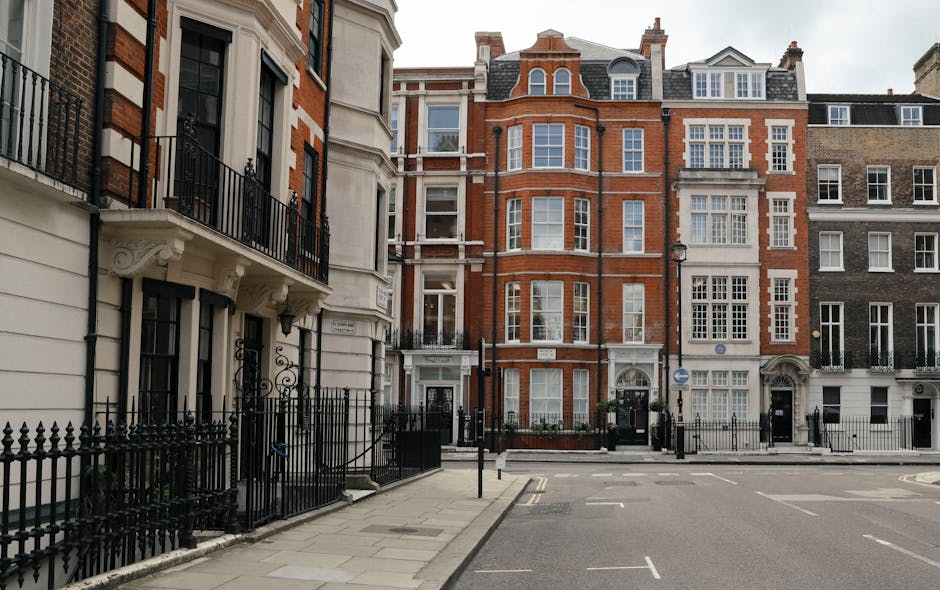
Portman Estate access guide for Marylebone removals
Posted on 10/06/2026
Portman Estate Access Guide for Marylebone Removals
If you are planning a move around the Portman Estate, the first thing to understand is this: access shapes everything. Parking, timing, lift use, concierge rules, road width, neighbour sensitivities, even where the van can wait for two minutes without causing a scene. In Marylebone, those details can make the difference between a calm move and a very long day.
This Portman Estate access guide for Marylebone removals brings the practical bits together in one place. It explains how access usually works, what to check before moving day, the common pinch points in elegant central London streets, and how to plan a smoother removal whether you are moving from a flat, townhouse, or office. Truth be told, the building might look straightforward from the outside and still be a bit of a puzzle once the van arrives.
Along the way, you will also find sensible links to related service pages, planning resources, and trust information so you can move from research to action without bouncing around the site.
Why Portman Estate access guide for Marylebone removals Matters
The Portman Estate covers a large and distinctive part of Marylebone, and that matters because the area is not built for random, last-minute moving chaos. Streets can be narrow, access may be managed, buildings often have rules about loading, and some properties are simply awkward for large vehicles. A removal that works well in a suburb with wide roads can fall apart here in minutes.
For residents, landlords, tenants, and office managers, the practical question is not just "Can we move?" It is "Can we move without delays, complaints, damage, or extra charges?" That is where proper access planning pays off. You avoid blocking the wrong entrance, turning up at the wrong time, or discovering too late that the lift is booked or the building needs advance notice.
In a place like Marylebone, the details are the job. A few examples:
- A basement flat may need extra carrying time and more hands.
- A top-floor apartment may need stair protection and careful route planning.
- An office move may require booking service lift windows around business hours.
- A single parking mistake can throw the whole schedule off.
If you are also comparing moving support options, it can help to look at the wider removal service overview and the more specific local pages such as removals in Marylebone or man and van Marylebone. Different homes, different access needs. Simple, but easy to miss.
How Portman Estate access guide for Marylebone removals Works
There is no single universal process for every Portman Estate property, which is exactly why planning matters. Access typically depends on the building type, the street layout, the landlord or managing agent's rules, and whether you are moving in, out, or between storage and a property.
In practice, most moves follow a similar rhythm:
- Confirm the property details. Check floor level, lift access, stair width, entry codes, and any restrictions on using communal areas.
- Check loading access. Look at where a van can stop, how long it can stay, and whether there are any timing limits.
- Book building permissions early. Some blocks ask for notice before moving day, especially if lifts or shared entrances need protecting.
- Match the vehicle to the route. A smaller van or shuttle approach may work better than trying to force a larger vehicle into a tight street.
- Plan the carrying route. Think about front entrance, service entrance, lift use, stairs, and where items can be staged inside.
That sounds straightforward, but the small issues are what catch people out. A parked delivery van outside the wrong entrance. A concierge who was never told. A sofa that looked easy until the hallway corner said otherwise.
For this reason, many movers around the area choose a local specialist rather than a generic citywide firm. If you need something more flexible, man with a van Marylebone or a dedicated removal van in Marylebone can be a better fit than sending a large vehicle into a tight address blind.
Key Benefits and Practical Advantages
A good access plan is not just about avoiding hassle. It improves the whole move from start to finish. You save time, protect the property, and reduce the stress that tends to creep in right when everyone is carrying something heavy and slightly too large for the doorway. Classic.
| Benefit | What it means in practice | Why it matters in Portman Estate moves |
|---|---|---|
| Better timing | Shorter waits, fewer missed windows | Many buildings and streets are time-sensitive |
| Less damage risk | Clear routes and protection for walls, lifts, and floors | Common areas in managed buildings need extra care |
| Cleaner communication | Everyone knows who is coming, when, and where | Concierge teams and neighbours appreciate clarity |
| Fewer surprises | Access issues are spotted before moving day | That is often the difference between smooth and messy |
| More accurate quotes | Costs reflect real access conditions | Less chance of awkward add-ons on the day |
There is also a quieter benefit: confidence. When people know the route, the loading point, and the schedule, the whole team settles down. You can feel it. Less rushing, less guessing, fewer people standing in the hallway wondering who is in charge.
If you are moving furniture or special items, a specific service like furniture removals in Marylebone or piano removals in Marylebone may be worth considering. Heavy or awkward items often demand a more careful access plan than ordinary boxes do.
Who This Is For and When It Makes Sense
This guide is useful for quite a wide group of people, and not just if you are moving a full household. In Marylebone, access planning matters for anything from a small flat move to a bigger relocation involving staging, storage, or office equipment.
- Tenants moving in or out of a Portman Estate flat.
- Homeowners coordinating larger house removals.
- Landlords and agents arranging tenant changeovers.
- Office managers needing organised business removals.
- Students moving a handful of bags, boxes, and furniture.
- Anyone with specialist items such as art, piano, or delicate furniture.
It makes sense whenever the building has any of the following:
- shared corridors or service entrances
- lift booking rules
- parking or waiting restrictions
- narrow access routes or basement delivery points
- concierge-controlled entry
- time-limited moving windows
If you are unsure what kind of move you need, the area-specific pages can help you narrow it down. For example, flat removals Marylebone suits apartment moves, while house removals Marylebone fits larger domestic jobs, and office removals Marylebone is the better match for business relocations.
To be fair, not every move needs a huge operation. Sometimes you just need the right van, the right timing, and someone who knows the area well.
Step-by-Step Guidance
Here is the simplest reliable way to prepare for a Portman Estate move without overcomplicating it. You do not need a spreadsheet the size of a door. You do need a few key checks.
1. Confirm the exact building access details
Ask for the essentials: entrance point, lift availability, floor number, any key fob or code, and whether there are preferred moving times. If you are moving into a managed block, ask whether the concierge or managing agent needs advance notice.
2. Measure what actually needs to move
Not every item is equally simple. A wardrobe, sectional sofa, treadmill, desk, or bed frame can change the whole logistics plan. Door widths, tight corners, and stair turns matter more than people expect. A tape measure saves arguments later.
3. Check vehicle access before you book
For streets around Portman Estate, the question is not just whether a van can get there, but whether it can stop safely and legally close enough for loading. Ask about parking restrictions, time limits, and any need for permits or temporary loading arrangements. A short wait can become a long wait if you have to circle the block.
4. Decide whether you need extra protection
Hallway runners, door protectors, mattress covers, and padded blankets can make a real difference in shared buildings. If there is a lift, it should be treated like a narrow moving corridor, not an afterthought. A bit of care goes a long way, especially in polished communal spaces.
5. Build the move around the weakest point
That is the trick, really. If the lift is small, pack accordingly. If stairs are steep, reduce load weight per box. If access is only possible during a narrow window, stage everything before the van arrives. The move should be designed around the hardest part, not the easiest.
6. Confirm the day before
A quick check-in can prevent annoying surprises. Reconfirm time, address, access code, lift booking, and contact number. If something changed overnight, you want to know before the first box hits the pavement.
When people want a fuller service rather than a single van and driver, it can help to review local removal services and the practical extras available through packing and boxes in Marylebone.
Expert Tips for Better Results
Small adjustments can make a surprisingly big difference around Portman Estate. Here are the habits that tend to save time, frustration, and the occasional bruised knuckle.
- Use a single point of contact. One person should handle the building, the movers, and the van arrival details. Mixed messages waste time.
- Keep essentials separate. Passports, chargers, medication, keys, and one kettle should not disappear into a random box. Let's face it, nothing improves morale like being able to make tea early.
- Label by room and priority. "Kitchen - first open" is more useful than "miscellaneous."
- Pack heavier items in smaller boxes. Easier to carry, safer on stairs, less chance of a mid-corridor groan.
- Photograph access points. A quick photo of the entrance, loading area, or parking sign can help everyone understand the setup.
- Ask about lift padding and floor protection. In managed buildings, this is often expected, not optional.
One of the simplest expert habits is also one of the least glamorous: start early. A move scheduled for 10:00 a.m. is often easier to handle if the boxes are ready the night before and the access details are checked by breakfast. The room feels different then too; less panic, more control.
If you are weighing service levels, there is a useful difference between a compact, flexible setup such as man with van Marylebone and a more full-service approach that may suit larger homes or more complex access.
![View of a residential street in Marylebone with red brick buildings featuring white-framed sash windows. A street sign indicates 'Providence Court W1,' and another sign shows 'Balderton Street W1.' In the foreground, a person dressed in grey and dark clothing is loading or unloading items near a black waste bin positioned on the pavement, which is partially enclosed by a black metal railing. The scene includes a black van parked at the rear of the buildings, with the back doors open, suggesting ongoing furniture transport or home relocation activities. The area is well-lit with natural daylight, and the street appears quiet with no other pedestrians visible. This image illustrates the typical environment encountered during local house removals and packing and moving processes in Marylebone, where [COMPANY_NAME] manages logistics such as loading furniture and boxes into vehicles, using equipment like trolleys and blankets to ensure safe transport through tight urban spaces.](/pub/blogphoto/portman-estate-access-guide-for-marylebone-removals2.jpg)
Common Mistakes to Avoid
Most access problems are not dramatic disasters. They are little things that stack up. A missed message here, a wrong assumption there, and suddenly the driver is waiting while a building manager asks questions nobody planned for.
- Assuming the van can park right outside. In central London, that is often wishful thinking.
- Forgetting to book the lift. If a lift is shared, another resident may already be using it.
- Underestimating carrying time. A long hallway or multiple stairs can add much more time than expected.
- Not warning neighbours or concierge staff. People are much more cooperative when they know what is happening.
- Packing boxes too heavy. The box might survive. Your back may not, and neither will the bottom of the box.
- Choosing the wrong vehicle size. Too large can be awkward; too small can mean extra trips and extra cost.
- Leaving fragile or specialist items until the end. Delicate pieces deserve a separate plan.
A common one in Portman Estate specifically is assuming a beautiful entrance equals easy access. It sometimes does, but not always. The elegant facade may hide a tight service route, a narrow internal turn, or a lift that is just a touch too small for the piece you absolutely must move. That is where careful survey beats optimism.
Tools, Resources and Recommendations
You do not need advanced kit for every move, but a few practical tools make a real difference. These are the basics worth having around before the van arrives.
- Tape measure: for doors, stairs, lifts, and furniture dimensions.
- Floor plan or room notes: especially helpful for offices and larger homes.
- Box labels and marker pens: simple, but they save a lot of time later.
- Protective covers: for mattresses, sofas, and upholstered pieces.
- Padding and blankets: useful for walls, corners, mirrors, and wood finishes.
- Mobile contact sheet: one list with the landlord, concierge, mover, and building contact.
Useful supporting pages on this website include storage in Marylebone if you need a gap between move-out and move-in dates, and same day removals in Marylebone if timing is tight and you need a rapid, organised turnaround.
It can also be worth reading the local background material, especially if you are new to the area. The guide to getting to know Marylebone gives useful context, while resident insights on living in Marylebone can help you understand the pace and feel of the neighbourhood. That local sense matters more than people think.
Law, Compliance, Standards, or Best Practice
For moves around Portman Estate, the main compliance concerns are usually practical rather than legal drama. Even so, there are standards and duties worth respecting. The exact requirements will depend on the building, the road, and the service provider involved.
Good best practice normally includes:
- respecting parking and loading restrictions
- following building management instructions
- using appropriate lifting and carrying methods
- protecting common areas from damage
- ensuring insurance is in place for the move
- communicating clearly about timing and access
If your move involves items that are heavy, awkward, or expensive to replace, ask about insurance and safety arrangements before the day arrives. That is one of those boring conversations that becomes very interesting if anything goes wrong. Same with the terms and conditions; not thrilling reading, but useful.
For businesses, there can also be additional expectations around access control, staff safety, and continuity of operations. If you need more detail on working practices, the health and safety policy and about us pages help build confidence in the service approach.
One more thing: if you are dealing with a managed building, ask first rather than assuming. Managed properties appreciate coordination. That is not a legal nicety; it is just good manners and, frankly, efficient.
Options, Methods, or Comparison Table
There is more than one way to handle a Portman Estate move. The right choice depends on property size, access complexity, budget, and how much heavy lifting you want to take on yourself.
| Method | Best for | Strengths | Possible drawbacks |
|---|---|---|---|
| Man and van | Small to medium moves, flexible access | Quick, adaptable, often cost-effective | Less ideal for large household loads |
| Full removal service | Heavier or more complex moves | More support, better for planning and packing | Usually requires more coordination |
| Self-managed move | Very small moves with simple access | Low cost if you already have transport | Higher risk of delay, damage, and stress |
| Shuttle or split-load approach | Tight streets or restricted access | Works well where larger vehicles cannot stop easily | May take longer overall |
In real life, many Portman Estate moves end up as a mix: a smaller van for the street, a careful team for the building, and a bit of staged carrying to suit the access route. Not glamorous. Very effective.
If you are comparing providers, you might also browse removal companies in Marylebone and pricing and quotes to see how services are structured and what information you should provide before booking.
Case Study or Real-World Example
Imagine a two-bedroom flat near Portman Estate with a lift, one tight hallway corner, and a loading area that cannot be treated as a free-for-all. The move looks manageable on paper. The sofa, bed, dining table, and boxes all fit in a van. Easy, right?
Then the details appear. The lift needs booking. The building asks for a time window. One wardrobe section is wider than the landing turn. The van can stop nearby but not directly outside. Suddenly, the move needs a small access plan rather than a simple arrival time.
In a sensible setup, the process would look like this:
- Confirm building access and lift booking two or three days ahead.
- Measure the largest items and compare them to the narrowest route point.
- Choose a vehicle size that can park legally and still keep the walk manageable.
- Protect walls and communal floors before any heavy lifting begins.
- Load the items in the order they will be needed first at the new property.
- Leave the essentials bag close to hand rather than buried under cushions and hope.
What changed the result was not luck. It was the access preparation. The whole job went from potentially messy to calmly workable because the mover understood the route before the first box moved. That is the pattern you want to repeat.
For a more specific domestic setup, a service like flat removals Marylebone can be a better fit than a generic move. If there are bulky items, you can also combine that with furniture removals support rather than trying to treat every item exactly the same.
Practical Checklist
Use this checklist before moving day. It keeps the important bits in one place and helps avoid the sort of silly oversights that feel minor at 8 a.m. and very annoying by lunchtime.
- Confirm exact address, floor, and property type.
- Check whether the building has a lift and whether it must be booked.
- Ask about entrance instructions, codes, fobs, or concierge procedures.
- Measure the largest furniture items and the narrowest access points.
- Confirm loading and parking restrictions around the property.
- Tell the mover if there are stairs, basements, or long internal walks.
- Set aside fragile items, valuables, and essentials separately.
- Use clear labels on boxes and room destinations.
- Arrange any required storage in advance if there is a gap between properties.
- Reconfirm the moving time the day before.
- Keep building contact details and mover contact details ready on your phone.
- Check insurance, terms, and any special handling needs.
If you are dealing with a student move, the process can be simpler, but the same rules apply. See student removals in Marylebone for a lighter-touch option when you do not need a full-scale household move.
Conclusion
A Portman Estate move does not need to be stressful, but it does need to be planned with the area in mind. Access is the real headline here. Once you understand the building rules, the street constraints, and the route from van to front door, the rest becomes much easier to manage.
The best moves in Marylebone are rarely the flashiest ones. They are the ones where someone checked the lift, measured the sofa, booked the time, and made sure the van could actually stop where it needed to stop. That is the difference between a smooth day and an unnecessarily difficult one.
If you are still comparing options, take a look at the services available here, read some customer feedback, and if you want to talk through your specific access situation, head to the contact page. A quick conversation can save a lot of guesswork later.
Get a free quote today and see how much you can save.
And if you are moving soon, do yourself a favour: get the access details early, keep the plan simple, and leave a little room for the unexpected. That small bit of breathing space makes a real difference.